Commercial roof inspection and planning

Commercial Roof Coating

Deer Valley Commercial Roof Coating

Deer Valley Roof Coating coats commercial roofs with five approved systems: Metal Roof Coating, Silicone Roof Coating, Acrylic Roof Coating, Spray Foam Roofing, and Shingle Roof Coating. We start with roof condition, drainage observations, access, and the work your building can support. Get A Free Estimate or Call Us at +1 (623) 310-0168.

Five approved commercial roof coating systems

Inspection-led material and repair decisions

Repair boundaries stated before coating work

Planning context for Phoenix weather exposure

Commercial Roof Coating Options for Deer Valley

Commercial Roof Coating Options for Deer Valley

Each system has a different roof-fit question. The existing surface, moisture condition, movement, foot traffic, and detail work determine which option belongs in the conversation.

Commercial roofing detail for Metal Roof Coating

Metal Roof Coating

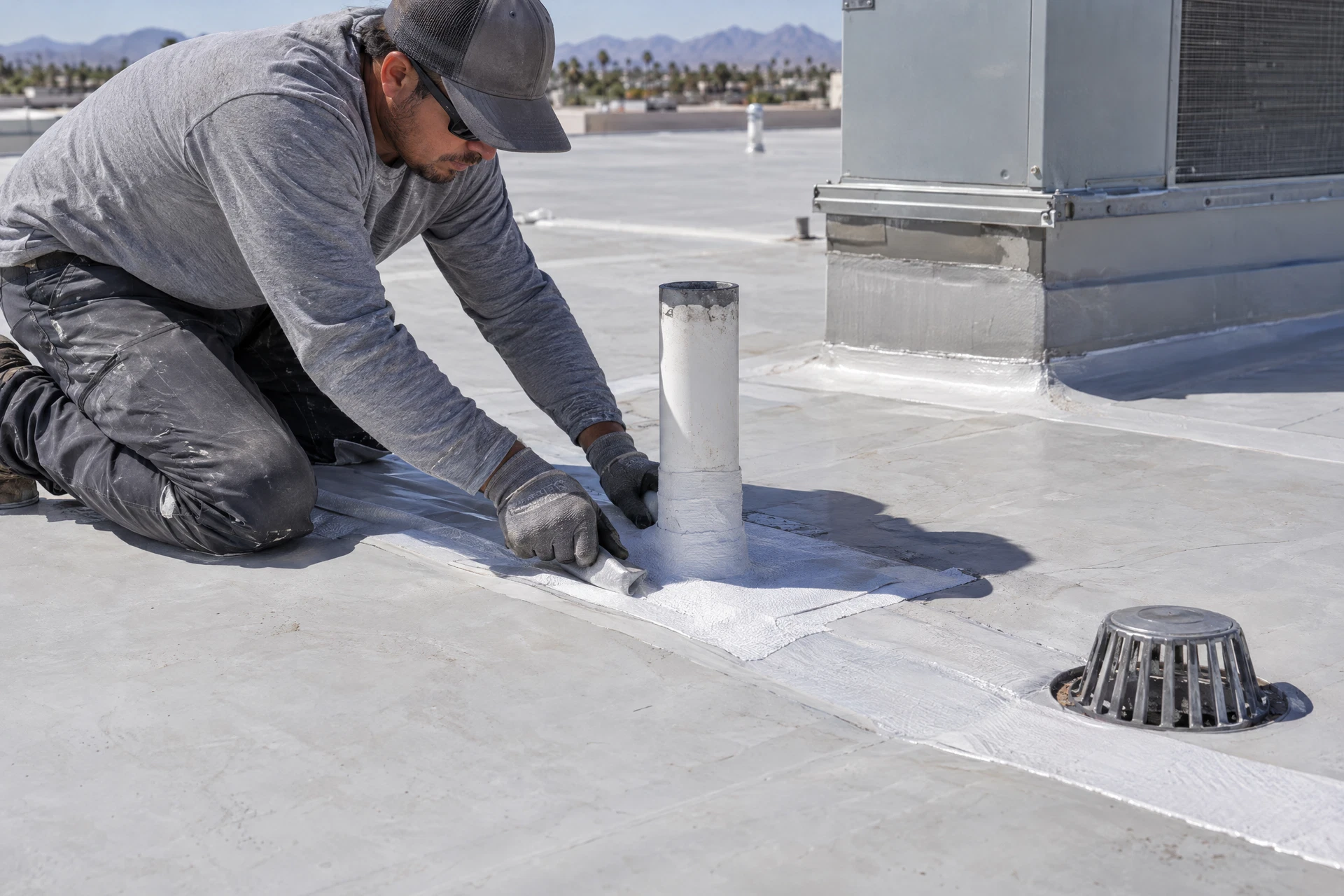
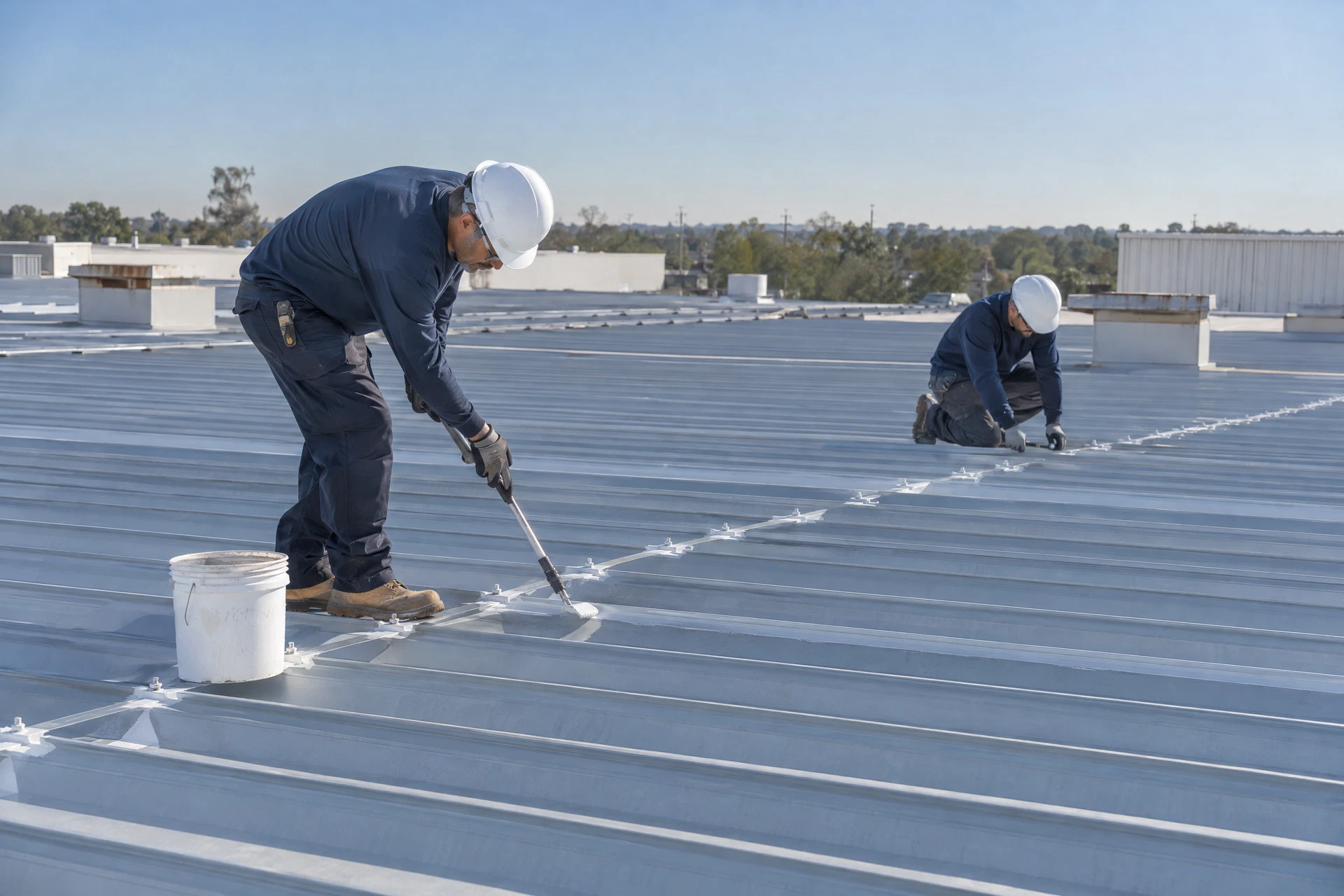
Metal panels can move, corrode, and open at seams or fasteners. We inspect panel condition, laps, penetrations, and attachment points before specifying preparation, reinforcement, primer, or coating. Repair-first areas remain identified in the scope.

  • Panel and seam review
  • Fastener and penetration details
  • Preparation before coating
Explore Metal Roof Coating
Commercial roofing detail for Silicone Roof Coating

Silicone Roof Coating

Silicone Roof Coating may fit a low-slope roof after ponding observations, moisture checks, and adhesion review. The chemistry needs a compatible substrate and detailed transitions. Drainage concerns still require their own evaluation before any coating plan.

  • Ponding investigation
  • Substrate moisture review
  • Primer and adhesion checks
Explore Silicone Roof Coating
Commercial roofing detail for Acrylic Roof Coating

Acrylic Roof Coating

Acrylic Roof Coating can suit selected, well-drained commercial roofs when application conditions support proper curing. We look at dirt, chalking, bleed-through, seams, penetrations, and the weather window before setting preparation and coat requirements.

  • Well-drained roof fit
  • Detail reinforcement
  • Application-condition planning
Explore Acrylic Roof Coating
Commercial roofing detail for Spray Foam Roofing

Spray Foam Roofing

Spray Foam Roofing depends on dry, serviceable foam and controlled site conditions. We inspect foam damage, exposed areas, drains, equipment routes, and overspray-sensitive locations. A protective topcoat plan follows only after the foam condition is understood.

  • Dry foam condition
  • HVAC and overspray controls
  • Topcoat protection review
Explore Spray Foam Roofing
Commercial roofing detail for Shingle Roof Coating

Shingle Roof Coating

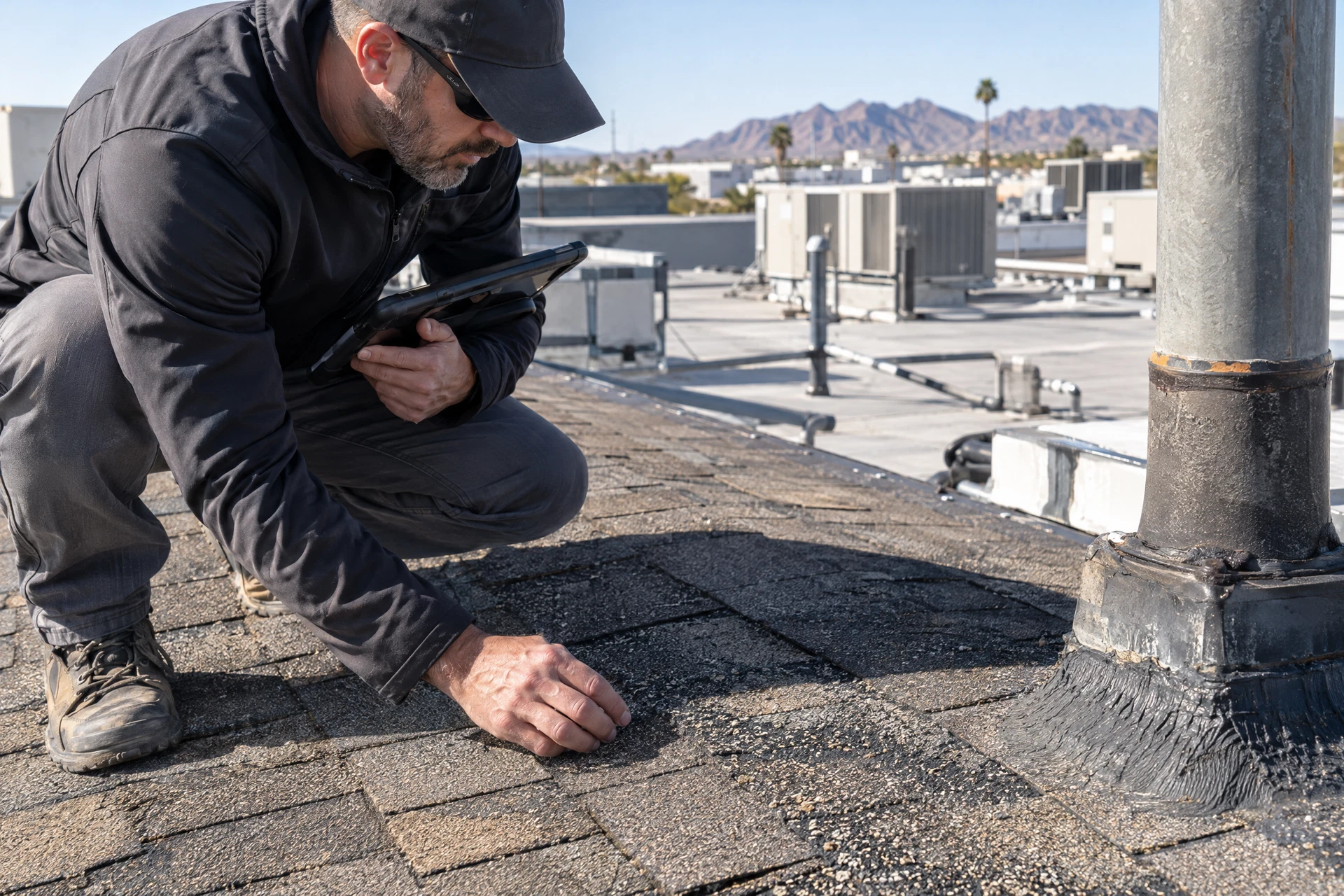
Shingle Roof Coating has a narrow compatibility gate. We review shingle condition, granule loss, ventilation, penetrations, manufacturer guidance, and applicable code questions. Repair or replacement may be the better boundary when the roof cannot support coating.

  • Compatibility review
  • Granule and shingle condition
  • Repair or replacement decision
Explore Shingle Roof Coating

Choose The Right Starting Point

Choose The Right Starting Point

A coating belongs on a roof that can support the specified system. Use these decision paths to frame the inspection conversation with ownership, facilities, and building occupants.

Coating-Ready Areas

Sound roof areas with a suitable substrate, manageable details, and acceptable moisture conditions can move toward cleaning, repairs, reinforcement, primer, and coating. The final system depends on the roof surface and project scope.

  • Sound substrate
  • Compatible surface
  • Defined detail work

Repair Before Coating

Leaks, open seams, failed flashing, damaged penetrations, blisters, wet sections, or localized substrate defects need correction before coating. Coating covers prepared surfaces; it does not resolve hidden moisture or structural damage.

  • Repair leak sources
  • Address wet or damaged areas
  • Confirm readiness afterward

Replacement Discussion

Widespread deterioration, an unsuitable substrate, or structural concerns can move the decision beyond coating. We identify those boundaries during inspection so the property owner can compare a realistic repair, restoration, or replacement path.

  • Document broad deterioration
  • Separate restoration from replacement
  • Set a clear scope

Match Chemistry To Roof Conditions

Match Chemistry To Roof Conditions

Product selection is a roof decision, not a default product choice. Compare the main questions below before discussing a coating specification.

Acrylic Roof Coating

Start with drainage, surface cleanliness, curing conditions, and future recoat planning. Acrylic can be considered for selected well-drained surfaces after preparation and detail review.

  • Drainage matters
  • Weather window matters
  • Detail work comes first

Silicone Roof Coating

Start with ponding observations, substrate moisture, adhesion, and compatibility. Silicone may suit certain low-slope conditions, but it still requires a prepared roof and defined repair scope.

  • Ponding review
  • Moisture check
  • Adhesion verification

Spray Foam Roofing

Start with foam dryness, damage, surface profile, equipment protection, and topcoat requirements. Existing foam condition controls whether recovery work can proceed.

  • Foam condition
  • Site protection
  • Topcoat plan

Metal Or Shingle Systems

Start with movement, corrosion, fasteners, granules, compatibility, and penetrations. These surfaces need closer condition review before any broad coating recommendation.

  • Movement or granule review
  • Compatibility gate
  • Penetration details

A Clear Coating Process

A Clear Coating Process

The process keeps roof condition, preparation, material choice, and building operations connected from the first inspection through the final review.

  1. 01

    Inspect Your Roof

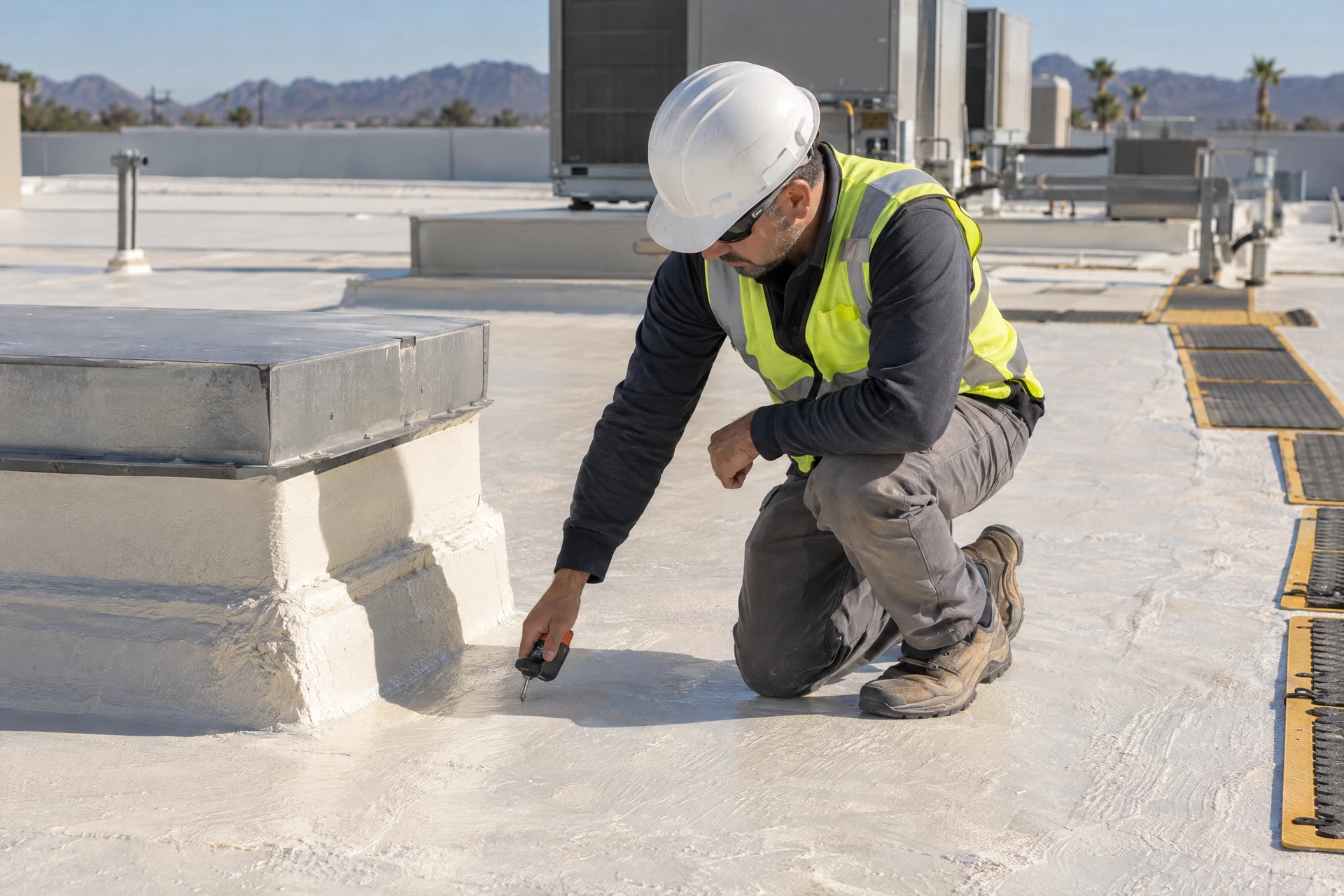
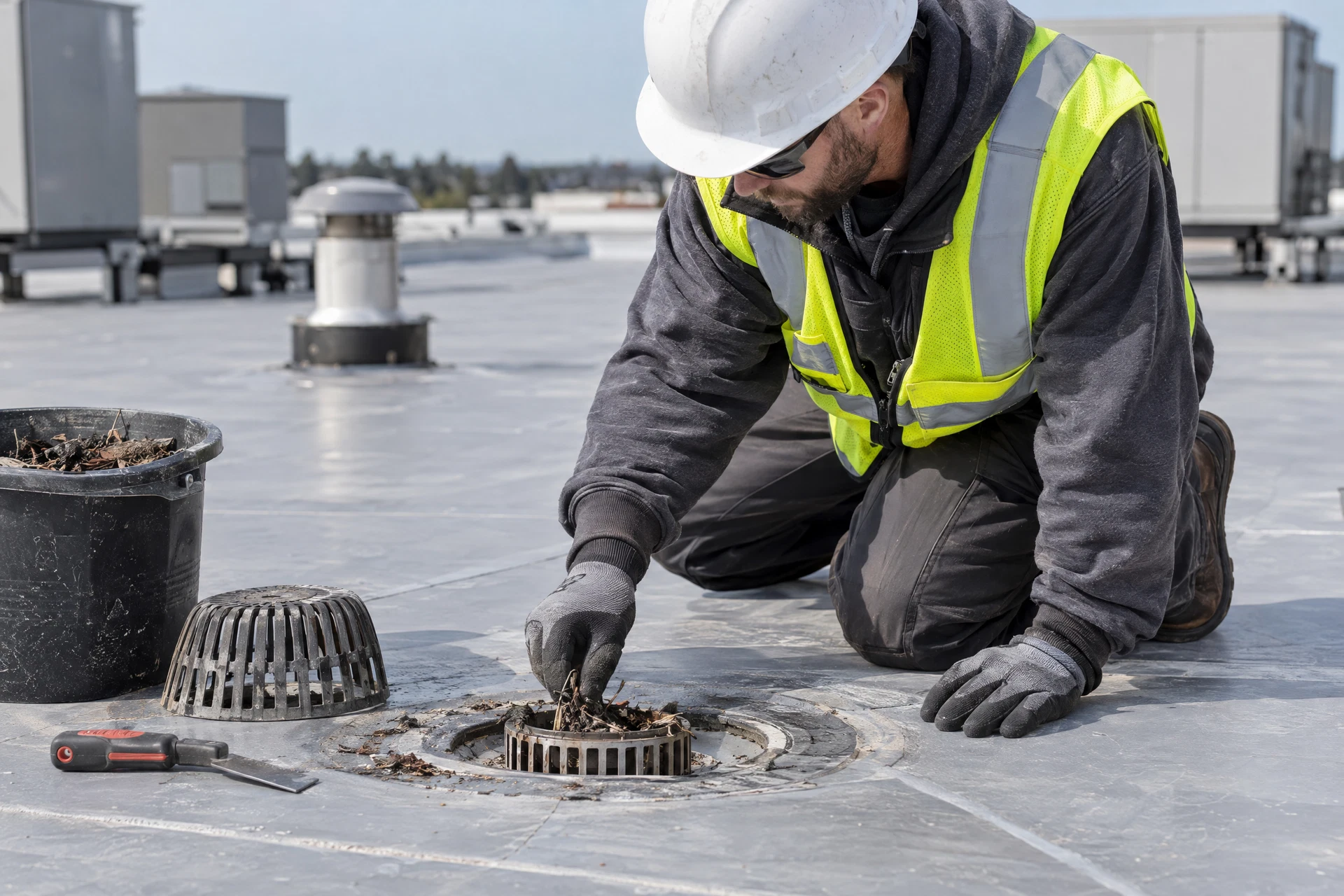
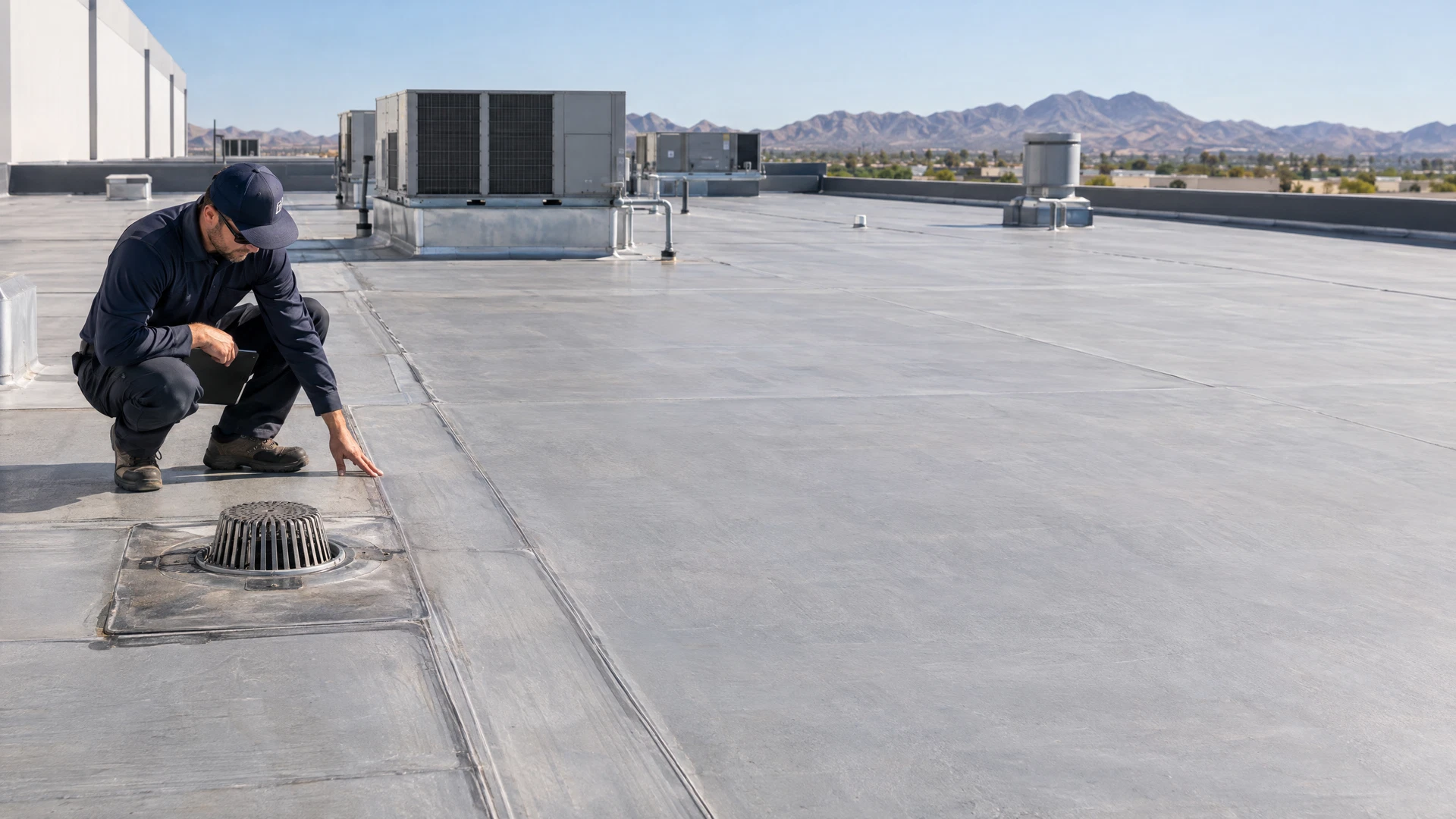
    We review the roof surface, seams, flashings, penetrations, drains, equipment routes, visible damage, and access conditions. Moisture or substrate concerns are separated from areas that may be ready for coating.

    • Review roof type
    • Document details
    • Identify repair boundaries
  2. 02

    Define The Scope

    The scope identifies coating areas, preparation, repairs, reinforcement, primers, equipment protections, and work constraints. Permit requirements depend on project scope and should be confirmed with the applicable authority before work begins.

    • Separate prep from coating
    • Record exclusions
    • Check permit scope
  3. 03

    Prepare The Surface

    Preparation can include cleaning, removal of loose material, seam treatment, detail reinforcement, and approved repairs. Coating follows a substrate review, not a shortcut around roof defects.

    • Clean and prepare
    • Treat seams and details
    • Verify substrate readiness
  4. 04

    Apply The System

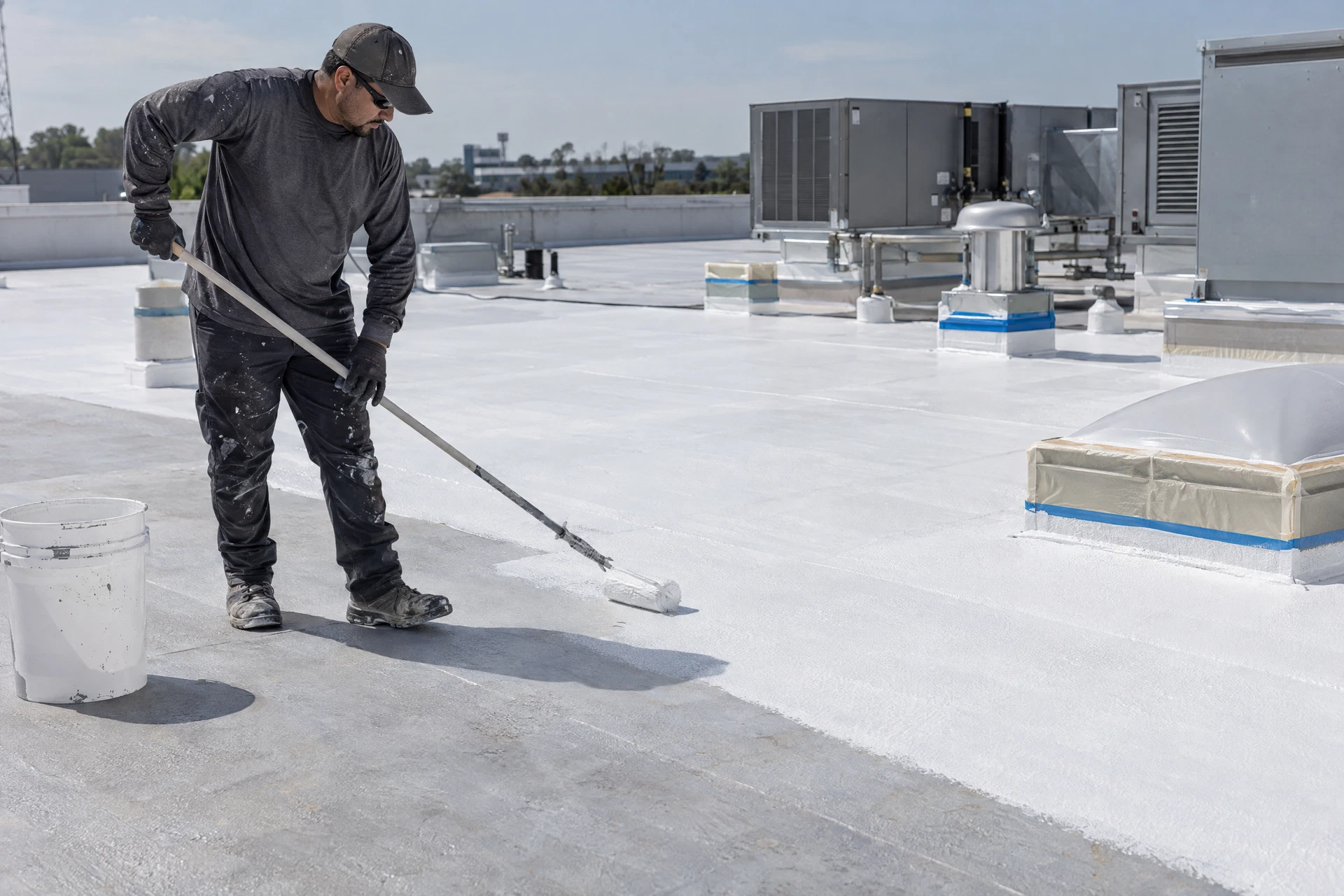
    The selected system is applied to the specified areas and thickness, with attention to transitions, penetrations, edges, and equipment-sensitive zones. Weather conditions and curing requirements remain part of the work plan.

    • Apply specified coats
    • Protect sensitive areas
    • Respect curing conditions
  5. 05

    Review The Finished Roof

    A final review checks coated areas, visible details, transitions, and items that remain outside the coating scope. The property owner receives a clear basis for ongoing roof observations and future maintenance decisions.

    • Review completed areas
    • Note remaining boundaries
    • Plan future observations
Commercial roof detail inspection

Roof Problems That Change The Plan

Roof Problems That Change The Plan

These conditions can change material selection, preparation, timing, or whether coating is appropriate. Flag them early during the building owner’s inspection discussion.

Open Seams

Open or moving seams need detail work before a coating can provide a continuous surface. The inspection should identify seam length, movement, adjacent damage, and reinforcement needs.

Corroded Metal

Corrosion can reduce the quality of the metal surface and complicate adhesion. Loose material, affected fasteners, and panel condition need review before a metal coating scope is set.

Wet Roof Areas

Wet insulation or trapped moisture changes the restoration decision. Those areas require investigation and a defined repair boundary before any coating is considered.

Damaged Flashing

Flashing directs water around roof edges and transitions. Failed flashing cannot be treated as ordinary surface preparation; it needs repair or replacement within the scope.

Ponding Observations

Standing water influences chemistry, adhesion, and future roof care. Document where water sits and how long the condition persists before discussing a low-slope coating system.

Busy Equipment Routes

HVAC service paths, vents, drains, and rooftop equipment create protection and access requirements. The scope should preserve safe routes and address details that receive regular foot traffic.

Benefits of Coating Your Roof

Benefits of Coating Your Roof

When the existing roof is a suitable candidate, a coating plan can give the property owner a defined restoration path with fewer surface tear-off activities than a full replacement scope.

Extend A Serviceable Roof

A coating can keep a suitable existing roof in service when the substrate, details, and moisture conditions support restoration. Inspection determines whether that benefit applies to your building.

Create A Continuous Surface

Liquid-applied material can cover prepared roof areas and detailed transitions as a continuous system. Seams, penetrations, and edges still require specific preparation and reinforcement.

Plan Around Building Operations

Coating work occurs at the roof surface, so the scope can be organized around equipment access, loading activity, tenants, and occupied areas. Site conditions determine the workable sequence.

Keep Repair Boundaries Visible

A clear scope separates coating from repairs and from areas that may need replacement. That distinction helps ownership evaluate the roof condition without treating every defect as a coating task.

Commercial Roof Coating Questions

Commercial Roof Coating Questions

Property owners and facility managers need practical answers before approving a roof scope. These answers keep fit, operations, weather, and repair boundaries in view.

What is a commercial roof coating?

A commercial roof coating is a liquid-applied system that cures over a prepared existing roof surface. Approved options include acrylic, silicone, and systems used with metal, foam, or compatible shingle conditions. The coating does not replace inspection, detail repairs, moisture investigation, or structural evaluation.

Which commercial roofs can be coated?

A roof may be a candidate when its substrate is sound, moisture conditions are acceptable, and the surface can support the selected system. Metal, low-slope, foam, and selected shingle conditions require different checks. Widespread wet areas, deterioration, or structural concerns can move the decision toward repair or replacement.

How much does commercial roof coating cost in Deer Valley?

Cost depends on roof size, access, roof type, surface condition, repair needs, detail work, chemistry, and specified thickness. A useful estimate separates preparation, repairs, and coating areas so ownership can compare scope rather than a single unexplained number. Get A Free Estimate for a building-specific discussion.

Can coating work continue while a commercial building operates?

Work planning can account for tenants, staff, loading areas, HVAC intakes, equipment routes, and occupied spaces. The workable sequence depends on roof access, material requirements, site controls, and the scope. Larger buildings may need phased work so operations and rooftop access remain organized.

When should Phoenix commercial roofs be evaluated for monsoon exposure?

The National Weather Service in Phoenix identifies June 15 through September 30 as the official monsoon season. Use that timing as planning context for roof observations and detail review. It does not guarantee a work window or predict a specific storm.

Do I need a permit to coat a commercial roof in Phoenix?

Permit requirements depend on the project scope. Permit rules can include specific exemptions and do not authorize code-violating work. Confirm the applicable requirements before work begins, especially when the scope includes more than routine maintenance or a simple covering.

Next Roof Step

Get A Clear Starting Point

Bring the roof condition, access concerns, and building details into one commercial coating discussion.

Roof Questions?

Talk About Your Commercial Roof

Leave your name and phone number, or call now to discuss the roof condition.

Call Us
Call Us+1 (623) 310-0168