Commercial roof inspection and planning

Commercial Roof Coating Selection

Deer Valley Commercial Roofing Services

Deer Valley Roof Coating coats commercial roofs with a system selected for the existing roof, surface condition, drainage pattern, access, and operating demands. Compare five approved services, then use an inspection to identify the practical path for your property.

Five coating services for commercial roofs

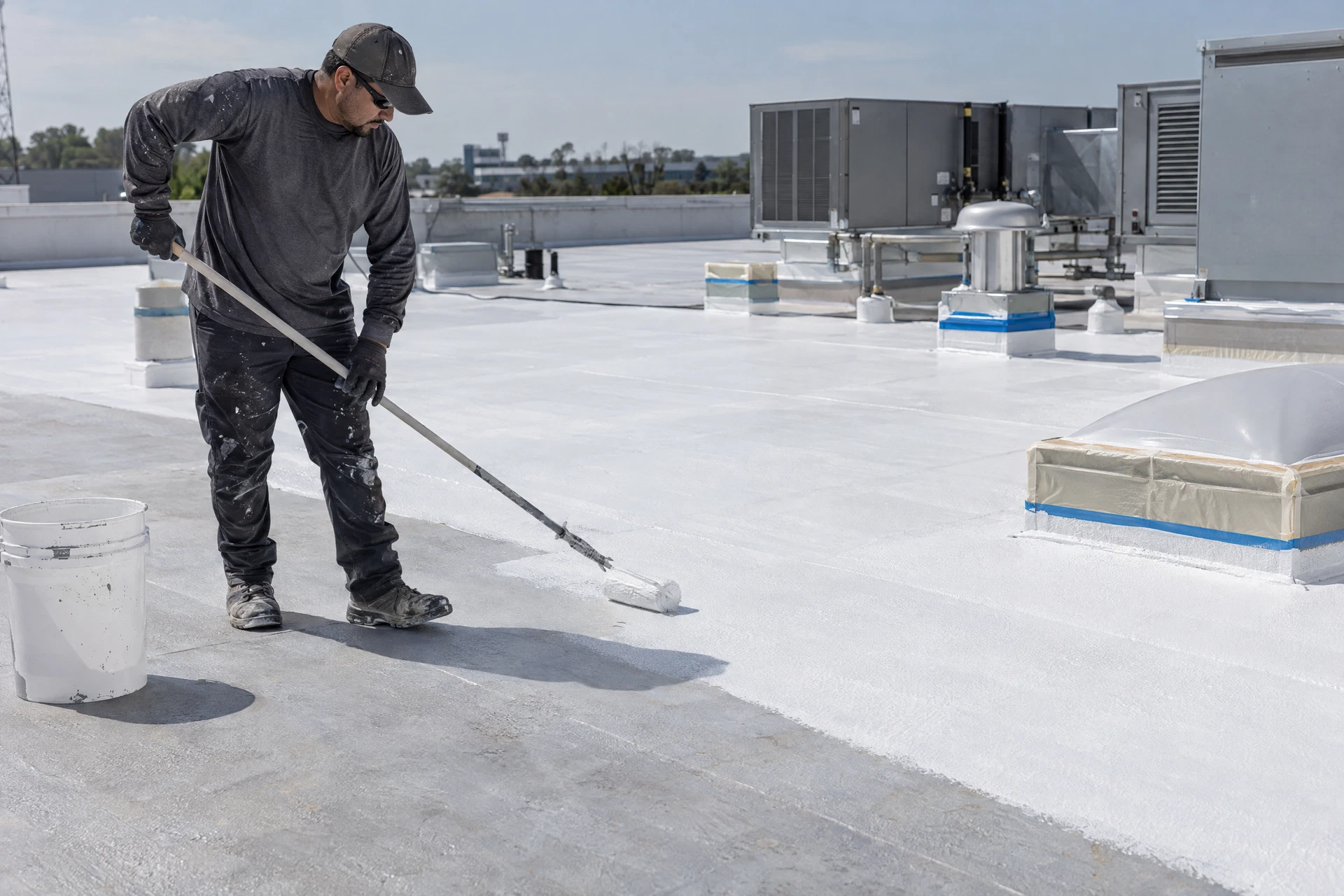
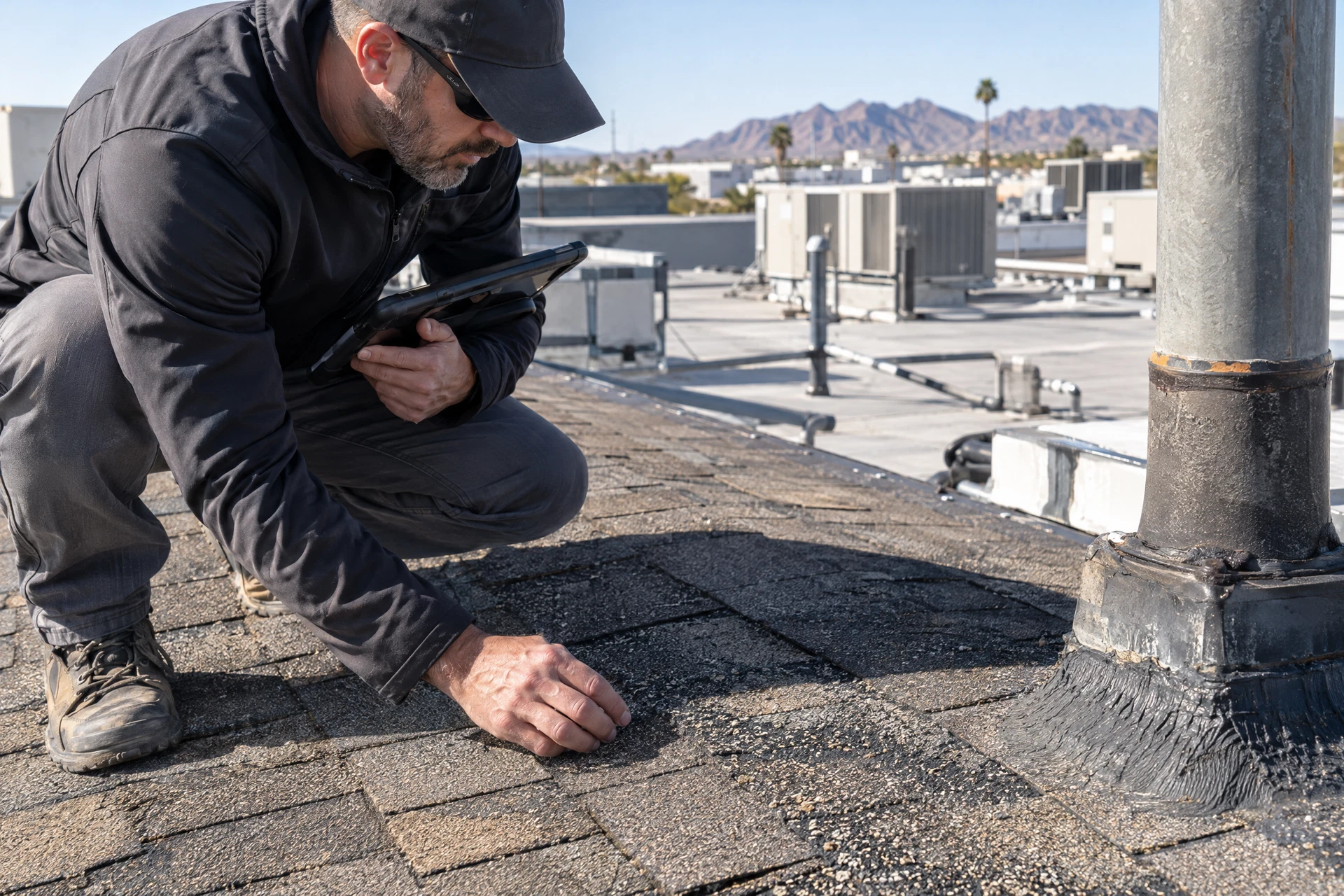
Selection starts with roof condition

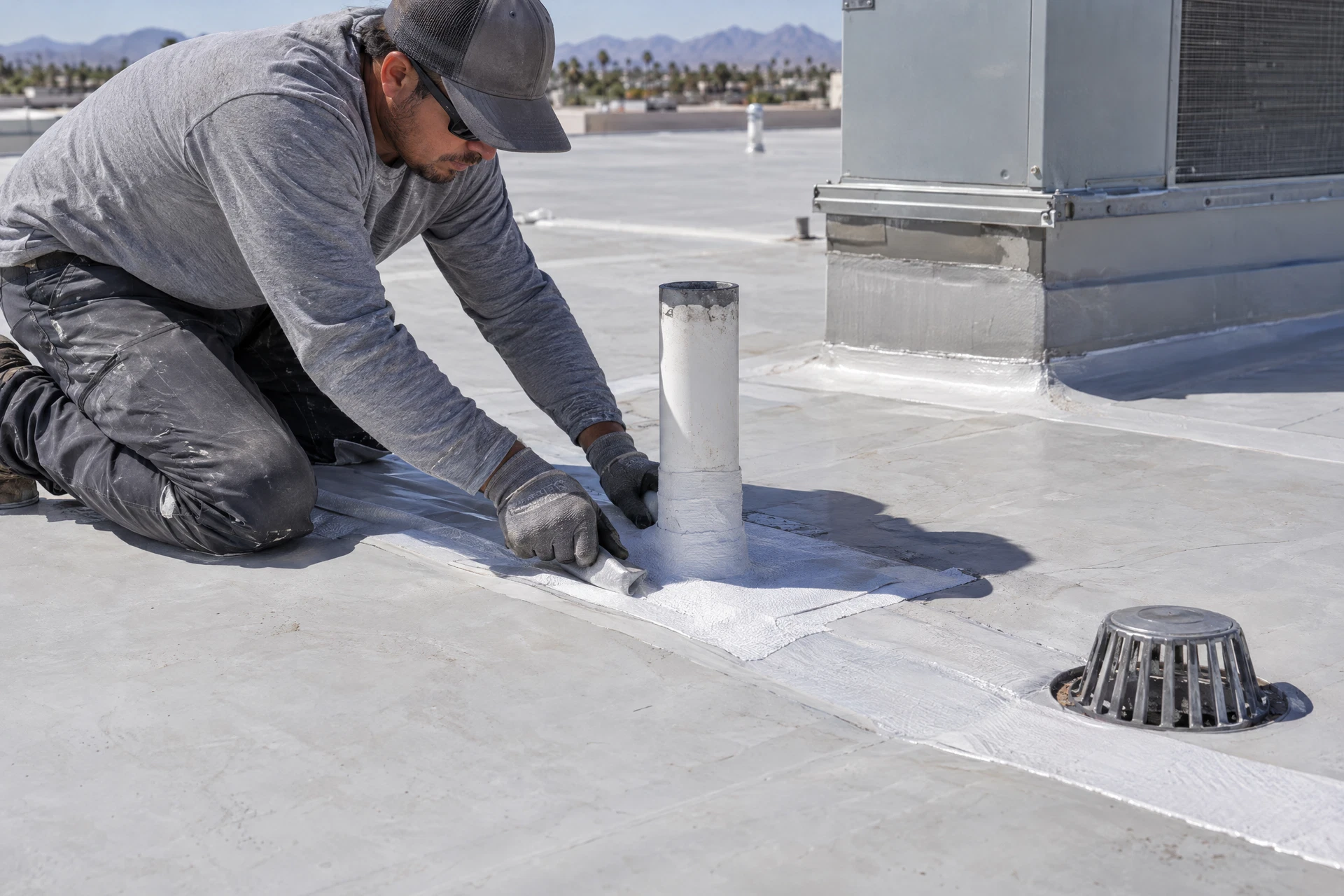
Details matter at seams and penetrations

Get A Free Estimate

Commercial Roof Coating Options for Deer Valley

Commercial Roof Coating Options for Deer Valley

Each approved service addresses a different roof profile or decision gate. Review the fit, then confirm substrate condition, preparation needs, and limitations before material selection.

Commercial roofing detail for Metal Roof Coating

Metal Roof Coating

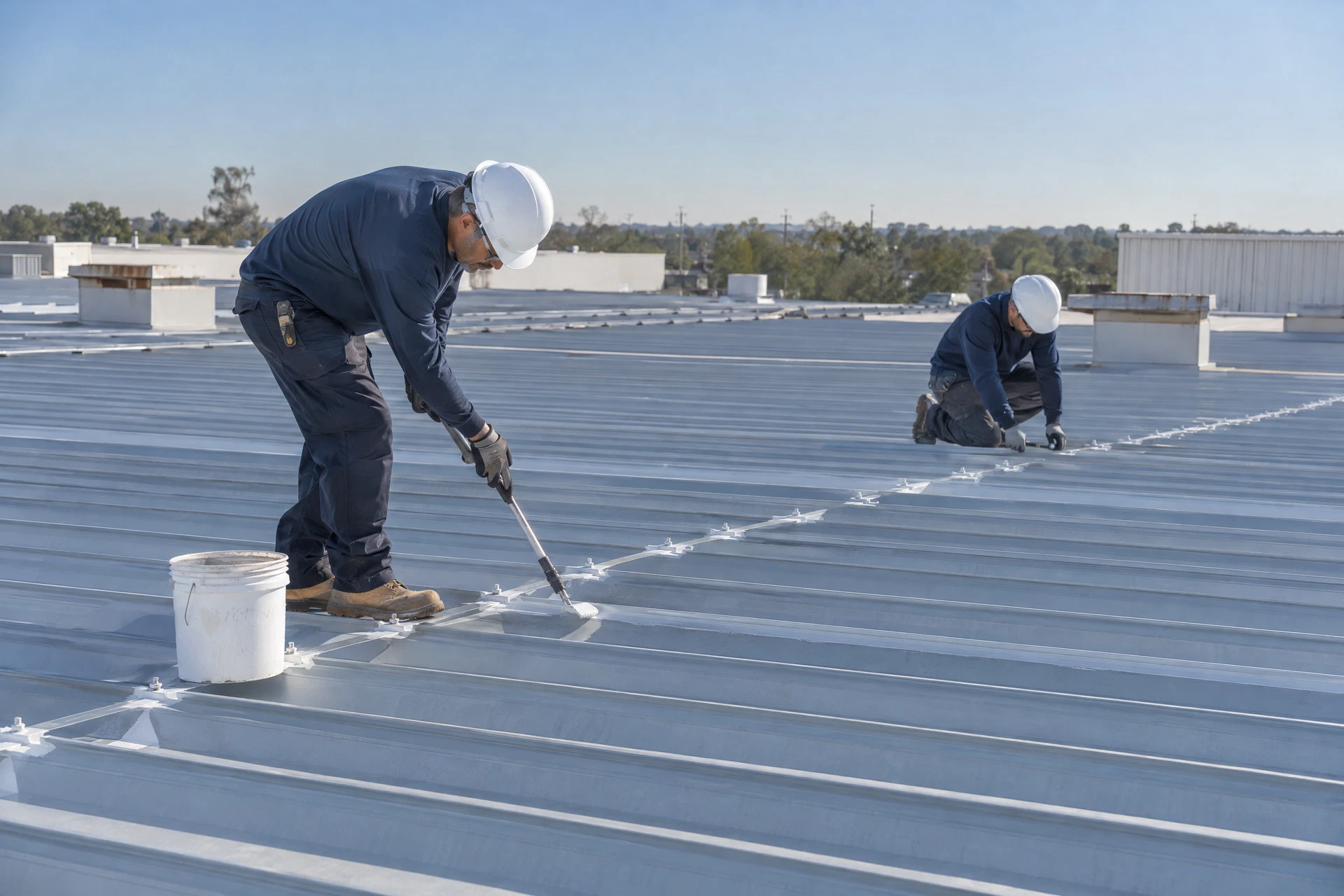
Metal panels need attention to corrosion, seams, fasteners, movement, and penetrations. Coating may fit when panels and attachments are sound after preparation and detail work. Rusted-through areas, loose components, or unresolved movement require a repair-first decision.

  • Standing seam and exposed-fastener roofs
  • Seam and fastener detailing
  • Condition-led coating decision
Explore Metal Roof Coating
Commercial roofing detail for Silicone Roof Coating

Silicone Roof Coating

Silicone can be considered for low-slope roofs after ponding, moisture, adhesion, and primer questions are investigated. It is not a substitute for correcting roof defects or deciding how water should move across the roof.

  • Low-slope roof review
  • Ponding-water investigation
  • Primer and adhesion checks
Explore Silicone Roof Coating
Commercial roofing detail for Acrylic Roof Coating

Acrylic Roof Coating

Acrylic is a water-based option for suitable, well-drained substrates when application conditions support proper curing. The review should cover weather windows, surface chalking, bleed-through, seams, penetrations, and future recoat planning.

  • Well-drained roof sections
  • Application-condition planning
  • Detail reinforcement before coating
Explore Acrylic Roof Coating
Commercial roofing detail for Spray Foam Roofing

Spray Foam Roofing

Spray foam roofing decisions begin with foam condition and substrate dryness. Damaged, wet, exposed, or poorly bonded foam needs careful evaluation. Overspray controls, rooftop equipment, foot traffic, and protective topcoat requirements shape the work plan.

  • Dry-substrate verification
  • Overspray and equipment controls
  • Foam and topcoat review
Explore Spray Foam Roofing
Commercial roofing detail for Shingle Roof Coating

Shingle Roof Coating

Shingle Roof Coating has a narrower compatibility gate than other options. Review shingle condition, granule loss, ventilation, penetrations, manufacturer guidance, and applicable code before considering a coating. Repair or replacement may be more suitable.

  • Compatibility confirmation
  • Granule and shingle review
  • Repair or replacement boundary
Explore Shingle Roof Coating

Choose By Roof Condition

Choose By Roof Condition

A product name does not determine the right system. Start with the condition that most affects risk, preparation, and long-term maintenance for the property.

Sound Metal With Detail Work

Consider Metal Roof Coating when panels, fasteners, seams, and penetrations can be prepared and detailed. Confirm that corrosion and movement are within a manageable repair scope before coating.

  • Check corrosion
  • Check fasteners
  • Check panel movement

Low-Slope Surface With Water Questions

Consider Silicone Roof Coating only after reviewing ponding duration, moisture, adhesion, and existing repairs. A coating choice does not correct drainage design or structural defects.

  • Map ponding
  • Verify dryness
  • Confirm compatibility

Well-Drained Roof With A Clear Window

Consider Acrylic Roof Coating when the substrate is suitable, surface preparation is defined, and weather conditions support water-based application and curing. Plan detail work before broad application.

  • Review drainage
  • Plan application window
  • Address bleed-through

Foam Or Shingle Compatibility Gate

Spray Foam Roofing and Shingle Roof Coating need focused inspections. Foam condition, dryness, and overspray controls guide foam work. Shingle compatibility, granules, ventilation, and manufacturer guidance guide shingle work.

  • Inspect the existing material
  • Set repair boundaries
  • Confirm the approved system

Benefits of Coating Your Roof

Benefits of Coating Your Roof

A suitable coating can support a more controlled roof-care plan when the existing roof is eligible and preparation is complete. Benefits depend on system choice, installation quality, and ongoing maintenance.

Defined Scope

A coating plan makes preparation, repairs, detail work, material type, and target coverage visible for ownership review. That gives property managers a clearer basis for comparing written scopes and planning access.

  • Separate prep from application
  • Identify repair-first areas

Less Tear-Off Activity

When the existing roof is a suitable candidate, a coating approach can avoid a full tear-off scope. The inspection still needs to identify areas that cannot responsibly be covered without repair or replacement.

  • Review existing layers
  • Set clear exclusions

Reflective Surface Planning

Reflective roof materials can change how much sunlight the roof surface absorbs. Actual building results depend on insulation, HVAC performance, conditioned area, roof coverage, and selected product data.

  • Review product data
  • Avoid unsupported savings assumptions

Maintainable Roof Details

A documented coating system makes seams, penetrations, equipment routes, and worn areas easier to include in future inspection discussions. Keep drains and service paths visible during ongoing roof care.

  • Track rooftop changes
  • Report punctures promptly

A Condition-Led Coating Process

A Condition-Led Coating Process

The process separates roof condition, preparation, material selection, and final review so a property manager can understand what the coating scope includes.

  1. 01

    Inspect Your Roof

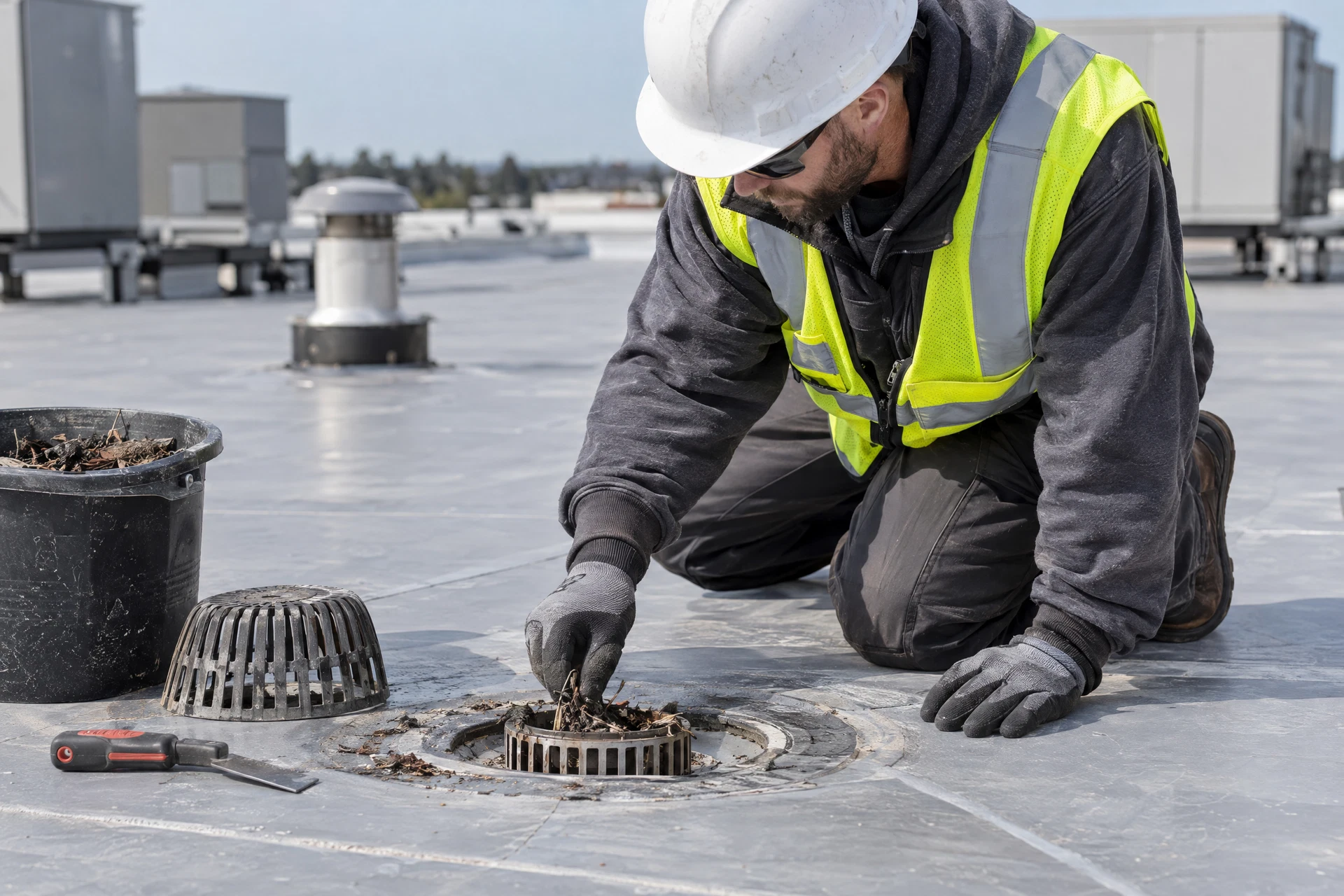
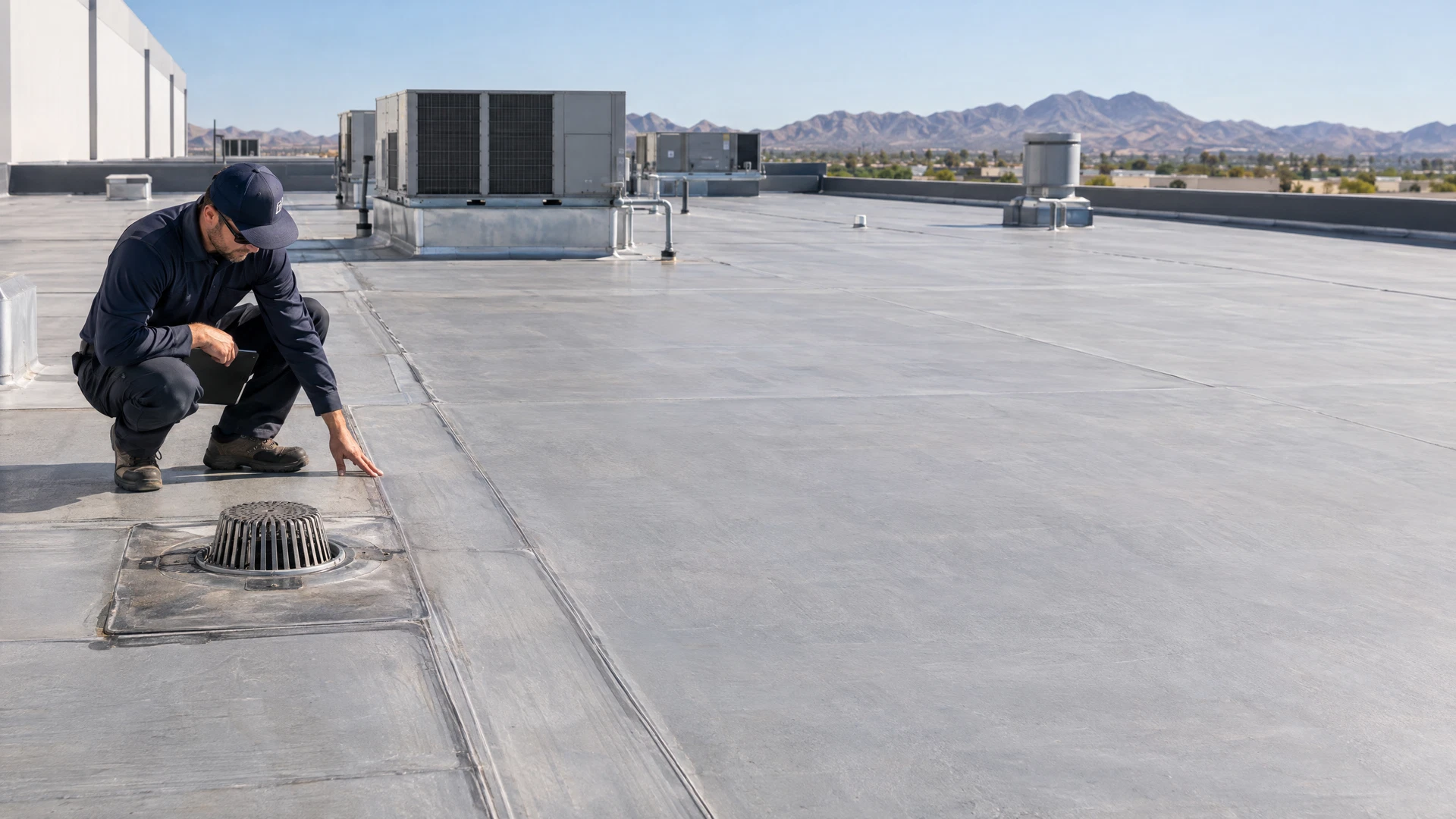
    Review roof type, seams, flashings, penetrations, drains, fasteners, equipment routes, surface damage, and visible moisture indicators. The inspection establishes whether coating, repair, replacement, or further investigation belongs in the next decision.

    • Document roof sections
    • Mark repair-first conditions
  2. 02

    Define Preparation

    Set the preparation scope for cleaning, loose material, corrosion, damaged details, failed sealants, surface chalking, and compatible primers. Preparation is specific to the existing roof and selected coating system.

    • Separate repairs from coating
    • Confirm substrate readiness
  3. 03

    Select The System

    Match Metal Roof Coating, Silicone Roof Coating, Acrylic Roof Coating, Spray Foam Roofing, or Shingle Roof Coating to the inspected conditions. Review drainage, adhesion, curing requirements, foot traffic, and compatibility before approval.

    • Compare system limitations
    • Confirm detail requirements
  4. 04

    Apply And Review

    Coordinate access around rooftop equipment and property operations, complete approved preparation and detail work, apply the specified system, and review visible coverage and finish. Keep maintenance notes for future roof inspections.

    • Plan work areas
    • Review completed details
    • Schedule ongoing checks
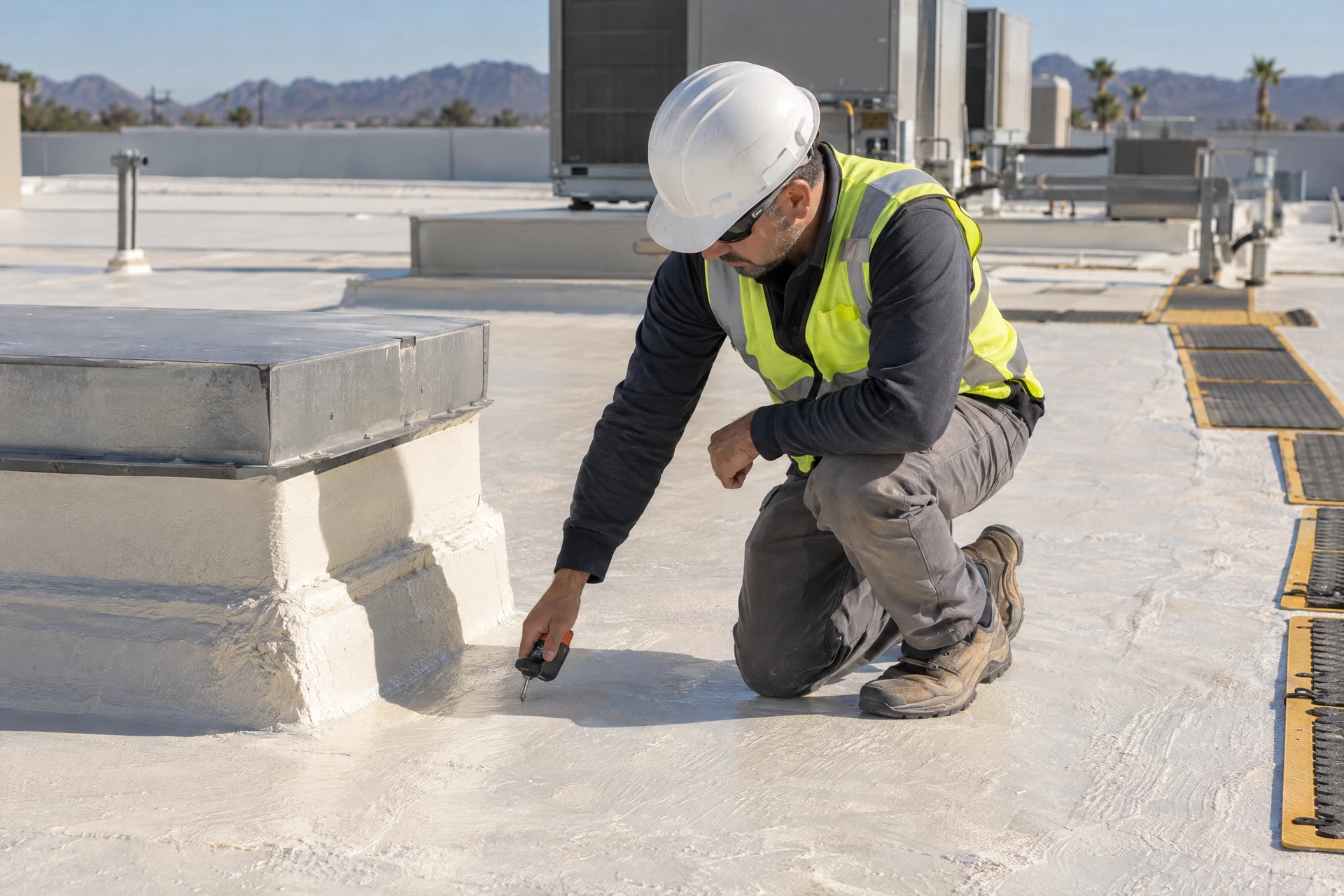
Commercial roof detail inspection

Compare The Five Services

Compare The Five Services

Use this quick comparison as a starting point, not as a substitute for inspecting the roof. The existing material and its condition control the final recommendation.

Metal Roof Coating

Best starting question: are the panels, seams, fasteners, and penetrations sound enough for preparation and detail work?

  • Primary review: corrosion and movement
  • Watch point: loose or failed details

Silicone Roof Coating

Best starting question: what is causing ponding or moisture exposure, and will the existing surface accept the specified system?

  • Primary review: ponding and adhesion
  • Watch point: unresolved roof defects

Acrylic Roof Coating

Best starting question: is the roof well drained and is there a suitable application window for a water-based coating?

  • Primary review: drainage and curing
  • Watch point: bleed-through and chalking

Spray Foam Roofing

Best starting question: is the foam dry, bonded, protected, and workable around equipment and required access routes?

  • Primary review: foam condition
  • Watch point: overspray and impact

Shingle Roof Coating

Best starting question: does the shingle assembly meet compatibility and condition requirements for a coating at all?

  • Primary review: granules and guidance
  • Watch point: repair or replacement need

Commercial Coating Questions

Commercial Coating Questions

These answers help property owners, building owners, and facility managers frame the first roof discussion before selecting a system.

What is a commercial roof coating?

A commercial roof coating is a liquid-applied layer installed over a suitable existing roof after inspection and preparation. The selected chemistry, thickness, substrate, seams, penetrations, and repair scope matter. A coating is not a universal cover for structural defects, wet insulation, unresolved leaks, or every roof condition. Deer Valley Roof Coating coats commercial roofs after the system fit is reviewed.

Which commercial roofs can be coated?

Potential candidates include suitable metal, low-slope, and spray foam roof sections, along with other compatible assemblies after inspection. The decision depends on soundness, dryness, adhesion, detail condition, and preparation needs. Widespread moisture, deteriorated structural components, or severe material failure can move the recommendation toward repair or replacement instead of coating.

How do I choose between silicone and acrylic?

Start with drainage, ponding exposure, substrate compatibility, surface condition, and application conditions. Silicone may be considered where ponding questions require a compatible system. Acrylic may fit a suitable, well-drained roof when a water-based application window is available. Neither choice should be made from chemistry alone or used to hide unresolved roof defects.

Can a coating handle ponding water?

Some coating systems are designed for ponding exposure, while others have important limitations where water remains. First document where water sits and investigate the roof condition. Coating selection does not fix drainage design, structural defects, or every source of recurring water. The recommendation should identify ponding areas, preparation needs, and any repair or further evaluation required.

Can work continue while a commercial roof is coated?

Often, roof work can be planned around building operations, rooftop equipment, loading areas, tenant access, and service routes. The practical plan depends on the property, equipment, materials, access controls, and work areas. A property manager should identify sensitive operations before scope is finalized so staging and daily coordination can be addressed directly.

How long does a commercial roof coating project take?

Timing depends on roof size, access, surface preparation, repairs, weather conditions, curing requirements, and the selected system. A small prepared section may require a different sequence from a large occupied property. The useful planning document should separate inspection, preparation, detail work, application, curing, and final review rather than rely on a generic duration.

What maintenance does a coated roof need?

Plan regular roof inspections and additional checks after severe weather. Keep drains and scuppers clear, protect rooftop service routes, report punctures or equipment damage, and watch worn details, exposed foam, and areas with heavy dust. Maintenance should record changes to equipment and access paths so future inspections can assess the coating and the roof beneath it.

Set The Right Starting Scope

Set The Right Starting Scope

Bring the roof type, known leak areas, rooftop equipment concerns, access limits, and operating requirements to the first discussion. Deer Valley Roof Coating can help frame the coating decision around the existing commercial roof.

Roof Questions?

Talk About Your Commercial Roof

Leave your name and phone number, or call now to discuss the roof condition.

Call Us
Call Us+1 (623) 310-0168